Ukrainian wedding traditions start well before the ceremony with svatannia, a formal visit by matchmakers to the bride's family, and continue through bread and salt, an embroidered rushnyk the couple stands on, a decorated wedding bread called korovai, and a playful "ransom" of the bride on the wedding morning. The same family customs return twice a year at the big religious holidays: Sviat Vechir, the Christmas Eve dinner of 12 meatless dishes, and Easter, when families carry a basket with paska and pysanky to church to be blessed. Below we explain each custom in Ukrainian terms and what it means if you, a foreign partner, are about to join one.
Customs vary by region and by family: a village wedding near Ivano-Frankivsk can last two days, while a Kyiv couple may keep only the bread and the rushnyk. Ask her family which parts they keep.
Svatannia: how the matchmaking visit works
In the old village version, the groom sent two respected married men, the starosty, to the bride's parents. They arrived with a loaf of bread and opened with a coded story: they were hunters following a rare marten, and the trail led straight to this house. Everyone knew what the story meant. If the young woman agreed, she brought out embroidered towels and tied them across the matchmakers' shoulders, and the groom received a scarf or a towel too. If she refused, she handed them a pumpkin. Ukrainians still say "to give someone a pumpkin" (daty harbuza) when a person is turned down.
Today the visit is usually a dinner. The groom and his parents come to the bride's home, bring bread, flowers for her mother and something for the table, and the two families agree on the date, the budget split and the guest list. For a man whose parents live overseas, a video call during that dinner or a later meeting of the parents is a respectful substitute; her family will notice the effort.
The rushnyk and bread and salt
The rushnyk, a long linen towel with embroidered ends, appears several times during a wedding. The couple's hands may be loosely tied with one during the vows, and in church they stand on a rushnyk spread on the floor in front of the priest. A folk belief says the one who steps onto it first will have the final word in the family, so guests watch the couple's feet closely and laugh when both try to step at once.
When the couple arrives at the reception, the parents greet them at the door with a round loaf on a rushnyk and a small dish of salt on top. Each newlywed breaks off a piece, dips it in salt and eats it. Bread stands for a household that will not go hungry, salt for protection.
Korovai, the wedding bread
Korovai, the tall round wedding bread, comes decorated with dough birds, pine cones, flowers and braids, often with sprigs of periwinkle (barvinok) or viburnum berries pushed into the top. Traditionally married women from both families baked it together, singing as they kneaded; today most korovais come from bakeries.
The bread stands on the head table during the reception. Late in the evening it is cut and shared with every guest, so each person takes home a piece of the new family's good fortune.
The bride "ransom" game
On the wedding morning the groom and his friends arrive at the bride's house or apartment building and find the way blocked by her bridesmaids, cousins or a younger brother. To reach her he has to "buy" her (vykup nevisty). The bridesmaids set tasks: guess which lipstick print on a sheet of paper belongs to the bride, answer questions about her favorite food and the day they met, sing, dance, or pay with sweets, drinks and small change.
The whole game plays out with a lot of laughter in a stairwell or a courtyard. For a foreign groom the questions are the hard part, especially in Ukrainian. Ask the best man or a bilingual friend to stand next to you and translate; the bridesmaids usually go easier on a guest from abroad, though they rarely let him off completely.
The wreath and the veil
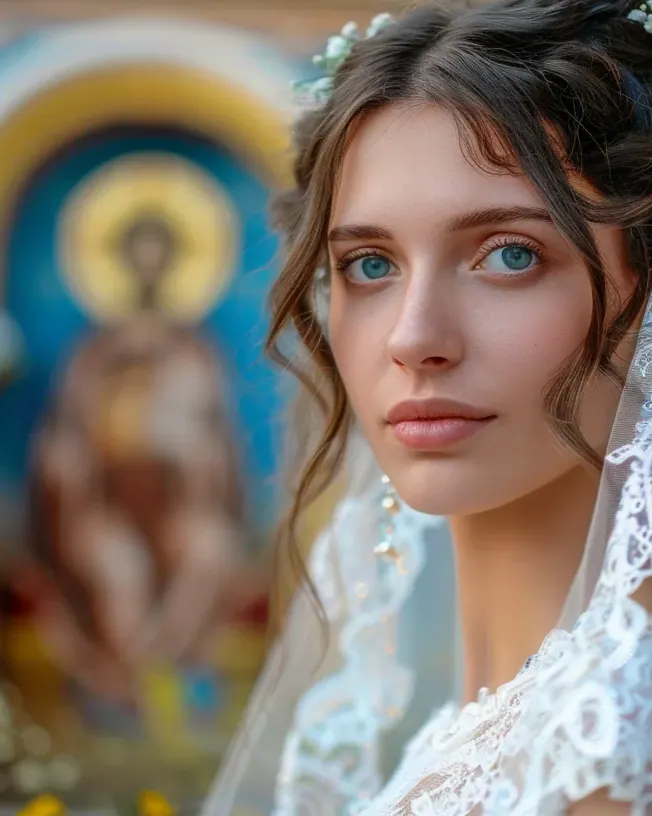
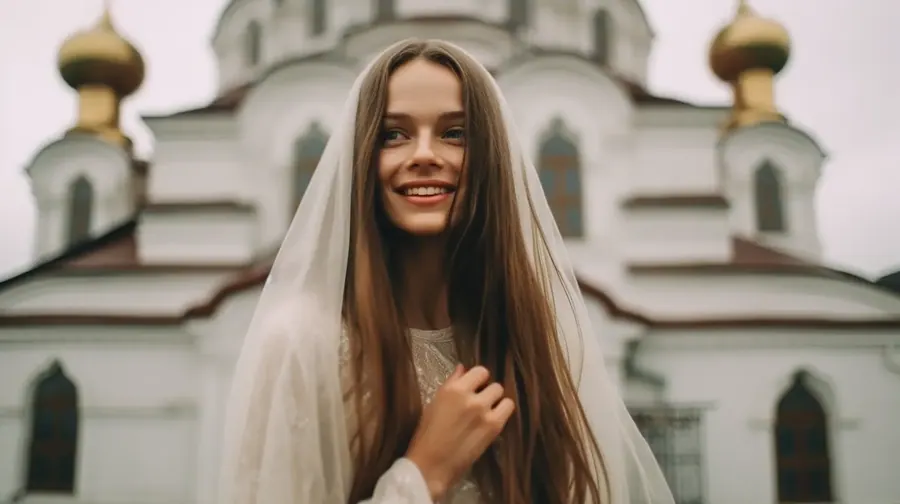
A flower wreath (vinok) with long ribbons was the sign of an unmarried girl, and on the wedding day it was removed and replaced with a married woman's headscarf or cap. Many brides now wear a light veil, a fresh-flower crown or both, and the wreath also shows up on holidays such as Ivana Kupala in summer.
Church wedding or registry office
In Ukraine a marriage becomes legal through state registration at a civil registry office, known by the abbreviation RATS (or DRATS). A church wedding (vinchannia) is a religious ceremony and does not replace the civil one. Many couples register first, sometimes on a weekday with only parents and witnesses, then hold the church service and the party on a weekend.
If a foreign citizen marries in Ukraine, the registry will ask for documents from his home country with translations and certification. The requirements change, so check the current rules with the registry office and on travel.state.gov before you set a date. Couples who plan to live in the US often marry there instead: the K-1 fiancé(e) visa requires the wedding within 90 days of her arrival, and the details are on uscis.gov. Many such couples hold a church ceremony or a family celebration in Ukraine later. Our guide to marrying a Ukrainian woman covers the practical side in more detail.


Sviat Vechir: Christmas Eve and the 12 dishes
Ukrainian Christmas traditions center on one evening, Sviat Vechir (Holy Evening). In 2023 the main Ukrainian churches moved Christmas to December 25, and the state holiday moved with them, so most families now gather on December 24. Some still keep the January 7 date, and some celebrate both. Ask her family which they follow before you book a flight.
The dinner starts when the first star appears in the sky, a job usually given to the children at the window. The table has 12 dishes, one for each apostle, and all of them are meatless because the evening ends the Advent fast. A typical set:
- Kutia, boiled wheat berries with poppy seeds, honey and nuts, eaten first. Each person takes at least a spoonful.
- Uzvar, a drink made from smoked dried fruit, served instead of wine in many homes.
- Varenyky with potato, cabbage or cherries.
- Holubtsi, cabbage rolls with rice or buckwheat, without meat on this night.
- Meatless borscht with mushroom dumplings (vushka), fish, beans and mushrooms.
Many homes put hay under the tablecloth and stand a wheat sheaf called a didukh in the corner. A guest is expected to taste every dish. You do not need to finish each one, but leaving the kutia untouched will get noticed.
Carols and the Christmas greeting
After dinner and on Christmas Day, groups of carolers go from house to house singing koliadky. Hosts thank them with sweets, coins or an invitation inside. Some groups perform a vertep, a short nativity play in costume. Around New Year a second cycle of songs, the shchedrivky, wishes the household a good year. The best-known shchedrivka, "Shchedryk" by composer Mykola Leontovych, is the melody Americans know as "Carol of the Bells".
The Christmas greeting works as a call and response. One person says Khrystos narodyvsia! (Christ is born!) and the answer is Slavimo Yoho! (Let us glorify Him!). More greetings are in our list of Ukrainian phrases.
Easter: pysanky, paska and the basket blessing
Easter (Velykden, "the Great Day") follows the older church calendar, so it often falls one or several weeks after Western Easter and sometimes on the same Sunday. In the week before, families decorate eggs. Pysanky are drawn with beeswax and dipped in dye after dye, producing fine geometric and plant patterns; each region has its own motifs. Krashanky are simpler eggs dyed one color, often with onion skins for a deep red-brown.
On Saturday the family bakes or buys paska, a tall sweet bread with white icing and colored sprinkles or a cross on top. Into a wicker basket go the paska, eggs, salt, butter, sausage and horseradish under an embroidered cloth. Late on Saturday night or at dawn on Sunday, people line up with their baskets in the churchyard, and the priest walks past sprinkling them with holy water. Easter breakfast at home begins with the blessed food.
The Easter greeting works the same way as at Christmas. Someone says Khrystos voskres! (Christ is risen!) and you reply Voistynu voskres! (Truly He is risen!).

Other parts of Ukrainian culture you will meet
A few more customs come up early in a relationship:
- Vyshyvanka, the embroidered shirt, worn at weddings, holidays and on Vyshyvanka Day in May, when offices and schools fill with embroidery.
- Name days. Many people celebrate the feast of the saint they were named after in addition to their birthday.
- Flowers in odd numbers. Even numbers are for funerals and graves, so a bouquet of six roses is a mistake.
Our hub on Ukrainian women covers language, regions and family life in more depth.
What this means for an international couple
Most mixed couples combine traditions. A common pattern is a civil wedding in the US or another country after a K-1 visa, with bread and salt at the reception door, a korovai from a local Ukrainian bakery and a rushnyk brought from her parents' home. If her parents cannot travel, a church ceremony or a family dinner in Ukraine or a neighbouring country such as Poland can follow later. Travel conditions and consular services have changed in recent years, so check travel.state.gov for current information before planning any trip.
A few practical points help:
- Ask which customs matter most to her and to her parents.
- Give guests a printed card that explains each ritual.
- Learn the two holiday greetings and the toast Hirko! ("Bitter!"), which guests shout to make the couple kiss.
- Plan your first December together around Sviat Vechir. If she lives abroad with you, cooking the 12 dishes together is a common way to bring her family's table into your home.
If you are still at the stage of meeting someone, our step-by-step guide on how to find a wife in Ukraine starts at the beginning, and the article on cultural understanding in international marriage looks at holidays, food and language after the wedding.
Ukrainian wedding traditions FAQ
What happens at a Ukrainian matchmaking visit?
The groom, traditionally through two matchmakers called starosty, visits the bride's parents with bread to ask for her hand. Agreement used to be shown by tying embroidered towels on the matchmakers' shoulders, refusal by giving them a pumpkin. Today it is usually a family dinner where both sides discuss the wedding plans.
Why do Ukrainian couples stand on a towel?
The embroidered rushnyk spread in front of the altar marks the start of a shared life. Folk belief says the person who steps onto it first will lead the household, which makes it one of the funniest moments of the ceremony.
Is the bride ransom a real payment?
No. It is a game on the wedding morning in which the groom answers questions and completes tasks set by the bridesmaids, paying with sweets, drinks and small change. Nothing of value changes hands between the families.
When is Ukrainian Christmas now?
Since 2023 the main Ukrainian churches and the state holiday follow December 25, so Sviat Vechir is on December 24. Some families still celebrate on January 7, and some mark both dates.
Do we need both a church service and a civil ceremony?
Only the civil registration makes you legally married. The church service is optional and religious; many couples register first and hold the church service and the party on a later weekend.